WhatsApp said on Tuesday a security breach on its messaging app had signs of coming from a government using surveillance technology developed by a private company and may have targeted human rights groups.
WhatsApp, which is part of Facebook, said it had notified the U.S. Department of Justice to help with an investigation, and encouraged all WhatsApp users to update to the latest version of the app, where the breach had been fixed.
WhatsApp, one of the most popular messaging tools in the world, is used by 1.5 billion people monthly.
The company said it was still investigating the breach but believed only a “select number of users were targeted through this vulnerability by an advanced cyber actor.”
Ireland’s Data Protection Commission (DPC), WhatsApp’s lead regulator in the European Union, said “that the vulnerability may have enabled a malicious actor to install unauthorised software and gain access to personal data on devices which have WhatsApp installed”.
The Financial Times initially reported on the WhatsApp vulnerability that allowed attackers to inject spyware on phones via the app’s phone call function.
The British newspaper said the spyware was developed by Israeli cyber surveillance company NSO Group — best known for its mobile surveillance tools — and affects both Android and iPhones.
Asked about the report, NSO said its technology is licensed to authorised government agencies “for the sole purpose of fighting crime and terror,” and that it does not operate the system itself while having a rigorous licensing and vetting process.
Masvingo – Nearly everyone in Zimbabwe struggles with the country’s failing electricity supply, but for many rural young people it may be their future that is at risk of shutting down, experts say.
Among the hardest hit by worsening electricity shortages across the country are school students, particularly in rural areas, they say.
Blackouts linked to drought are leading to disrupted or cancelled classes, above all in rural schools, which serve about 55% of the country’s students, school officials say.
The crisis also is discouraging teachers from working in the countryside, and threatening the health and the job prospects of young people, they say.
Electricity is an increasingly scarce commodity in Zimbabwe. The country gets much of its electricity from hydropower, but water levels in Lake Kariba, the world’s largest man-made reservoir, have plummeted by 30% as a result of drought.
Kariba is meant to contribute 819 megawatts (MW) towards meeting the country’s peak national demand of 1 345 MW, but output from the lake has fallen to just 470 MW.
Zimbabwe’s cities and villages are now frequently struck by 10-hour blackouts.
“Schools are hardest hit in this energy poverty debacle,” said Loyd Bako of the Zimbabwe Rural School Teachers Union, one of the country most prominent trade unions.
Computers, but no electricity
Betty Nyoni, 17, a physical sciences student from Demene, in the south of the country, would like to become an electrician designing cell phone towers, but is frustrated by her school experience.
“We normally have no electricity. We skip experiments in electrical physics and switchboard designs. Our test marks flop, and are inferior to students in city schools that have better power supplies,” she said.
Bako agrees that computer equipment, agriculture workshops and science laboratories are often left idle by the power cuts.
“Last week I visited a secondary school where students used a smoky diesel generator to dry seeds for a farm experiment. You can’t produce results in such chaos,” he said.
In recent years progress has been made in outfitting Zimbabwe’s rural schools with science laboratories, electric sockets and workshops with electrically powered machines. The government, donors and student alumni bodies all joined hands to plant technology in far-flung schools.
The Rural Electrification Programme, a state agency, says 803 schools had electricity installed and 402 rural school and clinics had been fitted with mini grid solar reservoirs by May 2015.
The agency’s chief executive, Joshua Mashamba, said the electrification has had multiple community benefits.
“When a rural school is electrified, a nearby clinic and growth point is covered too,” he said. Growth points are rural hubs where the government builds clinics, banks and other businesses in one place.
But the current power shortages are now choking off progress.
At many rural secondary schools, sciences and technical subjects like fashion and design are only taught on paper. Refrigerators that should freeze and preserve science samples for biology classes are unable to function. Machines to cut cloth designs for students cannot be turned on.
“Students are learning out of [their] imagination,” said Chenjerai Gwata, head of policy at the non-profit Zimbabwe Consortium for Civic Education. “Power is down and you bump into primary school students who try to learn what a website is in front of a laptop that’s switched off!”
Access to jobs?
Andrew Mlambo, an economist in the capital, Harare, is alarmed by the potential impact of the energy shortage on pupils’ futures.
“Zimbabwe is weighed down by over 70% joblessness. Students who obtain science and technical qualifications have better chances in a shrinking job market,” he said.
Reliable electricity is also a matter of health for pupils and communities. In the country’s driest province of Matabeleland, electricity is needed to run irrigation pumps for vegetable gardens that feed orphaned children and to power clinics.
The parents of children feel the pain of the power shortage too. Donald Dziva of Hwedza, one of Zimbabwe’s richest farming districts, owns a maize-grinding mill and butchery.
“Nowadays electricity is available only from 8pm to 5am. I sleep in my mill or butchery just to catch electricity when it’s switched back on. I’m forced to sell meat or refine grain at night. My losses are massive. Two of my kids may (have to) briefly stop attending college next year,” he said.
Rural recruitment problems
Noma Here, secretary of the Zimbabwe National Creche Schools Association, which oversees 140 early childhood schools, said power shortages are among the problems making it hard for rural schools to recruit teachers.
“Most graduate teachers I know shun rural schools with no electricity and piped water. For them these are no-go-areas,” she said.
According to Zimbabwe’s education ministry, there is a shortage of 1 521 science and mathematics teachers in the country. A sizable number of qualified teachers leave the country to seek better working conditions and wages in neighbouring South Africa, Namibia and Swaziland.
“Very few young, upwardly mobile teachers want to conduct evening classes in rural schools when power returns,” Noma said.
The education ministry was not available to comment on the electricity crisis in schools.
Innovators suggest that alternative sources of energy should be tried for Zimbabwe’s rural schools to improve access to reliable power.
One possible solution is mounting solar panels on top of classrooms to tap into the country’s abundant sunshine.
But Mlambo, the economist, is sceptical. “Solar is clean but expensive. The most recent school solar equipment kit for one school of 300 students costs $2 200.”
Harare – “Massive” load-shedding could begin as early as next week in Zimbabwe – because the cash-strapped authorities still haven’t settled an $80 million debt to Eskom, the Herald reports.
The state-run Zimbabwe Electricity Supply Authority (Zesa) has been unable to keep up with a payment plan agreed upon with Eskom earlier this year.
Now “frantic” efforts are being made to meet a May 31 payment deadline, Zesa boss Josh Chifamba was quoted as saying.
Eskom’s Matshela Koko has told Zesa supplies could be cut “with effect from June 1”, says the paper.
It’s understood that Zesa doesn’t have to pay the full $80 million back immediately but must meet the shortfall on the debt repayment plan.
This is bad news for Zimbabweans who’ve got used to mostly uninterrupted power for more than a year now. That’s partly due to a downturn in industrial demand inside Zimbabwe. Power-shedding was a daily reality during Zimbabwe’s last economic crisis up to early 2009.
Online watchdog @ZimMediaReview noted grimly that the load-shedding warnings come “just in time for winter.”
And a Herald reader suggested the authorities “print more useless bond notes and ship them to South Africa and see if ESKOM will accept them as payment!” in a reference to the special-to-Zimbabwe bank notes introduced late last year. The bond notes have failed to solve Zimbabwe’s cash shortages.
The closing of the hydropower dams was beyond the government’s control, said Badra Masoud, head of communication at the ministry.
“We cannot do anything because of the changes in environment – we are not getting enough rain.”
Ms Masoud said more people farming upstream from the dams was not helping the situation, as this reduced the flow of water.
“We are trying to convince Tanzanians not to farm upstream,” she said.
According to Tanzania’s private Citizen paper, the state-owned power company, Tanesco, has already shut down its major Mtera hydropower plant, which can generate 80 MW.
The country consumes 870 MW but it only currently generates 105 MW, the paper says.
Only 24% of mainland Tanzania’s population is connected to electricity services.
The BBC’s Aboubakar Famau in the main city of Dar es Salaam says those who can afford it tend to invest in generators because of chronic shortages.
Tanesco also imports power from Kenya, Uganda and Zambia.
The government wants to increase the number of people connected to the grid by 50% in the next 10 years.
Last month, three new gas power plants in Dar es Salaam were turned on, using gas piped from the south of the country.
But it is these plants are also now not working to full capacity because of technical glitches.
“I cannot predict when this will be sorted out because of the technical issues – we need to be patient so that all these problems and challenges can be sorted out,” Ms Masoud said.
Our reporter says the country’s long rainy season is expected to start in December
Government is working on a cocktail of fiscal and monetary measures that will trigger an expansion of the country’s foreign currency generation capacity, stabilise the interbank market and tame inflation to below 15 percent by year end.
In an interview with The Sunday Mail, following the renewal of his term by President Emmerson Mnangagwa, Reserve Bank of Zimbabwe governor Dr John Mangudya said stabilisation of the interbank foreign currency market was a key determinant to fight price increases.
He said, “We are working on a number of initiatives to expand the country’s capacity to earn foreign currency and putting in place lines of credit to mitigate the shortfall from the country’s exports.
“I therefore want to assure the nation that we are on the right trajectory to achieving a lower inflation level of below 15 percent in the last quarter of this year and further lower inflation levels in 2020 on account of the base effect and the stability of the economy.”
Inflation is currently pegged at 66,8 percent.
Dr Mangudya added that there was need for authorities to deal with market indiscipline for the economy to prosper.
He dismissed reports from certain quarters suggesting that the RBZ was the chief driver of the illegal foreign currency market.
Dr Mangudya said such reports were misguided and meant to dampen confidence in the economy.
He said immediate priorities during his second term in office would be to pursue confidence building measures, maintain price stability, enhance productivity and exports across all the sectors of the economy.
President Mnangagwa recently extended the governors tenure by another five years.
The extension was made in terms of Section 14 of the RBZ Act (Chapter 22:15) which stipulates among other conditions that “the Governor and Deputy Governors shall be appointed for their competence and experience in matters relating to banking, finance and economics.”
PRESSURE continues to mount on President Emmerson Mnangagwa as the country faces the prospect of crippling power cuts and looming work stoppages by doctors and teachers over poor salaries.
Power utility Zesa Holdings on Monday imposed rolling blackouts with industries — including mines — and households set to be without electricity for up to eight hours per day, which is likely to stoke mounting public anger against the failure by Mnangagwa’s administration to tackle an economic crisis that is characterised by shortages of fuel, medicines, foreign currency and rising food prices.
The southern African country last experienced such serious outages in 2016, while the latest blackouts are as a result of low water levels at Kariba Dam, which supplies water to the key Kariba South Power Station following a poor rainy season.
Zimbabweans are also grappling with soaring inflation that is eroding earnings and savings, while there appears to be no end in sight to the chronic fuel shortages.
Confederation of Zimbabwe Industries president Sifelani Jabangwe said the power outages would cripple industry.
“It will affect output, especially taking into consideration that our operating capacity is currently restricted. What makes matters worse is that these power outages are happening during working hours, thereby affecting the manufacturing sector. There is definitely need to find a way to get some imports into the country for our generation capacity at the moment is low,” he told NewsDay.
Doctors and teachers at public institutions yesterday gave government until month-end to address issues regarding their salaries and improve their working conditions or face a new wave of strikes.
The teachers and doctors are demanding salaries in United States dollars, among other benefits, from Mnangagwa who is battling discontent over his rule, price hikes and shortages in fuel, electricity and other basics.
Doctors have already written to government complaining over their employer’s failure to meet the promises made in January to force them to break a 40-day long strike.
They claim the salary adjustment awarded to them last month has already been eroded by the escalating cost of living precipitated by the plunging of the real time gross settlement dollar (ZWL$) against the US$.
Takavafira Zhou, president of the Progressive Teachers’ Union of Zimbabwe, and Obert Masaraure, leader of the Amalgamated Rural Teachers’ Union of Zimbabwe (Artuz), said they had notified Mnangagwa’s government of the impending job action if teachers’ demands are not met.
“If government is not going to review our salaries by June 3, we are going to withdraw our service because the cost of living is high and teachers are suffering, so if they don’t do anything, we will have to stop offering our service because the working conditions are unfair,” Masaraure said.
Zhou echoed similar sentiments, saying government had to work on improving their employees’ welfare through addressing grievances and giving them an audience whenever they approached responsible offices.
“Our position is very clear, that the onus is on government to capacitate teachers so that they can go to work. Without that, teachers will stop working because there is no other way out. We sought audience with the Labour minister, Dr Sekai Nzenza, who professed ignorance of the code of conduct expected of her,” he said.
“We have also written to President Mnangagwa, giving him about two weeks to respond. In the event that the two fail to meet our needs, we will down tools pending action”
In a letter to the director of Civil Service Commission on Friday, Artuz demanded that its members be paid in US dollars.
It also challenged government to review the rural allowance, which currently stands at ZWL$13.
The Zimbabwe Hospital Doctors Association has also written to their employer, the Health Services Board (HSB), over unfulfilled promises dating back to January.
In a letter dated May 10, the doctors notified the HSB of the worsening conditions of service in health institutions.
“We write on behalf of doctors who are currently serving in government hospitals in Zimbabwe,” part of the letter read.
“The letter serves to alert you of the growing dissent and discontent from doctors regarding conditions of service in the hospitals. We, hereby, inform the Health Services Board the major concerns that have generated this discontent.”
The doctors raised several issues, among them salary and allowances, duty-free vehicle loan scheme, lack of protective clothing in hospitals as the basis of their disgruntlement.
They also cited the HSB’s continued negligence of the bipartite negotiating panel as the reason why they are plotting another strike.
“We, hereby, call upon the HSB to abandon its practices of deliberately delaying and postponing the bipartite meetings, which are the only legal fora through which workers can register their displeasure regarding the conditions of service,” the doctors said.
“We further state that we intend to utilise this legal forum to table our demands with a view of pursuing other necessary procedures should the HSB fail to address our challenges as stated above.”
Since January, tension has been growing between government and its employees in the health and education sectors over salaries and work conditions.
Doctors downed tools for close to 40 days in December and teachers followed suit in February citing poor remuneration and working conditions.
Mnangagwa’s administration has been under pressure from the restive workers due to the deteriorating cost of living that has rocked his government that came into power in November 2017 after the fall of former president Robert Mugabe through a coup.(newsday)
Four people died on the spot in Chivhu while two others were injured, one of them seriously, when a Nissan Elgrand they were travelling in burst its rear right tyre and overturned.
The accident occurred on Sunday around 4pm, when the vehicle was travelling towards Chivhu along the Chivhu-Roy Road.
National police spokesperson Assistant Commissioner Paul Nyathi confirmed the tragic accident.
Asst Comm Nyathi said the deceased and the injured were taken to Gutu Mission Hospital.
“I can confirm the death of Felicitus Marapira Maredza, Tafadzwa Maredza and Linda Maredza, all of Harare. The fourth victim is yet to be identified,” said Asst Comm Nyathi.
“Preliminary investigations are that the now deceased were travelling in an unregistered Nissan Elgrand along the Chivhu-Roy Road, carrying six people. Upon reaching the 45km peg, the vehicle burst its rear right tyre, resulting in the driver losing control. It then overturned three times before landing on its wheels on the right side of the road.
“As a result four people died on the spot, while two others were injured”.
Asst Comm Nyathi said further investigations into the accident were underway.
He urged motorists to ensure that their vehicles, including tyres, were in good order before setting off on their journeys.
Asst Comm Nyathi said in some cases motorists fitted wrong sizes or worn-out tyres on their vehicles which was not only dangerous to them but also other road users. —
CHINHOYI, Zimbabwe – Timothy Hoba, 12 years old, sits on the edge of the wooden bench with five other Grade 4 students in a classroom at Newlands Primary school in Chinhoyi, Mashonaland West. He is lucky to have that seat in a space that is packed with 34 students, forcing some to sit uncomfortably on the concrete floor. The classroom measures 5 x 5 metres: a floor area of only 25 square metres.
The roof is made of iron sheets that make noise as they rattle on a windy afternoon. They are supported by decaying wooden beams that have become home to termites and cobwebs. It is unbearably hot inside and the teacher keeps the door open to allow in some fresh air. The beams that support the roof are weather-beaten and in different states of decay. The rainy season has started and there is evidence that in the previous season, rain dripped down through the cracks on the walls. The structure that was built using homemade low-quality bricks – known popularly as farm bricks – has white paint that has since turned a shade of yellow and is peeling in some areas, a sign of dereliction.
Timothy is candid: “We are too crowded in this classroom and at some point, one of the iron sheets was blown off by wind, and during the rainy season we had to relocate to the special class. The room is usually hot in summer and cold in winter. Despite the fact that the roof was fixed there are still holes that let in water. There are bugs that also have made a home in this class.”
Newlands is situated 10 km from Chinhoyi town and about 100 km from the capital, Harare. Reaching the school requires travel on a rocky off-road for about a kilometre. The school was developed in two farmhouses that are 200 metres apart and once belonged to a commercial farmer. The first house accommodates Grades 4 to 7 while the other is inhabited by early learners aged 3 to 5, and students in Grades 1 to 3. Newlands was opened in 2003 after the country’s fast track land reform programme. It has an enrolment of about 400 students. The area’s population includes both resettled farmers and illegal gold-panners.
“When one of us has flu and they decide to come to school, it is easy to [catch it]. At one point one of us had chicken pox and we did not know it and it ended up affecting some of us. Although we have many books it is hard to read in class because most of us feel sleepy all the time,” Timothy said.
The farmhouse rooms, which have since been turned into classrooms, are each crammed with than 60 students, some using benches as desks. The white ceiling made of cardboard has partially caved in and sags dangerously, while water stains from the leaking roof, form uncoordinated shapes over what exists. One of the rooms has no roof and has since been turned into storage space for firewood. The walls are littered with graffiti. The perimeter fence that once kept stray domestic animals at bay has given way. The previously pristine house used to have electricity, but the now-vandalised sockets mean there’s nothing but darkness at night.
New classrooms
About 50 metres from the farmhouse, a new modern building has been constructed and has brought a lot of excitement in the resettlement area and to students like Timothy. The school started construction of the block in 2018 after it became a beneficiary of the School Improvement Grant (SIG) that has helped many disadvantaged schools in Zimbabwe.
The grant was made possible thanks to the Education Development Fund (EDF II), 2012-2020: a multi-donor pooled funding mechanism supported by UK aid from the UK government and the German Development Bank (KfW). The SIG is a component of the Education Development Fund (EDF). The EDF enables donors to jointly support the Ministry of Primary and Secondary Education is its activities, with UNICEF managing the funds and providing technical support.
Timothy is excited: “Everyone wants to be in those classrooms and the teacher said we will have more space and will not have to squash on one bench like now. I am happy that we will not have to change classes whenever it rains or feel sleepy when it is hot.” Timothy whose parents are deceased stays with his aunt and uncle about a kilometre from the school. He said his family survives on subsistence farming and selling vegetables. Timothy dreams of being a teacher when he finishes school.
Ms. Chengetai Mashaya, acting Deputy School Principal of Newlands Primary says: “We have benefited a lot from the School Improvement Grant. We are not short of text books because we received those about three years ago, before we got the grant for this infrastructure. What is fundamental though is that we have started to build a block that allows our students to have a safer learning space. The situation now is that we are crowded and there is a lot of interference because classes are not sound proofed.”
Chengetai explained that because the farmhouse was dilapidated and small, it caused a lot of health hazards and most parents discouraged their children from coming to school. “There is new hope in that we are finishing up this block that will [accommodate] two grades and we will also build another one. This will help free-up space and encourage learning. The rain is coming and my fear is that [the old farmhouse] is no longer safe. Only last week a roof was blown away. The worst could have happened. We have lost furniture before. You will now understand why the SIG is making this community hopeful. Our aim is to build six blocks eventually,” Chengetai revealed.
Going digital
Chengetai said after the construction of the new block, the school was chosen by a technology company, GoDigital, to benefit from their social responsibility programme of providing internet to vulnerable schools. “This block has given us more benefits because we are starting to resemble a proper school. Parents who did not take us seriously, are starting to participate in our construction of this block. Even companies are beginning to look at us differently and willing to invest more. Education must win,” said Chengetai, who as she outlined that eLearning was important in modern ways of teaching. She also hopes that the school will soon be able to re-establish electricity infrastructure.
As class comes to an end, the excited children of Newlands Primary, clad in their maroon uniforms, run out onto the dusty open space to play, drowning out the sound of dogs barking in the distance. For a moment, before leaving the classroom, Timothy pauses clutching his English text book – a prized possession – and reaffirms his dream. “One day I want to be able to teach others. It is a job I would love to do. If I do not make it as a teacher, I want to be a driver so that I can see other places.” And with that he runs out to join his classmates. (Newsday.com)
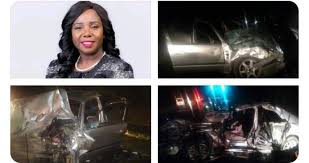
The well-known opposition party Movement for Democratic Change (MDC) Alliance have recently lost two senior officials in an accident outside kwekwe
They were four members of the party who were involved in the accident and one of them was Vimbai Tsvangirai Java a member of Glen view south.
These four were coming from their party meeting which was conducted in Bulawayo when they had a head collision with a truck which was coming from Harare.
Some of the members were taken to
the kwekwe general hospital except for Vimbai Tsvangirai Java who was taken to Harare
hospital for a special treatment with specialist doctors and there are no much
details about her state as for now.
“Two of the senior officials have
lost their lives but their names will not be disclosed until their next of kin
have known it first” said Jacob Mafume one of the MDC Alliance member.
It is a beautiful Tuesday morning and Sarudzai (36) wakes up very early at the break of dawn to do her household chores and prepare her eldest 12-year-old child for school.
Limping, she does her chores methodically and thoroughly. Sarudzai is living with a disability, her left leg is deformed since birth but she has mastered the art of doing everything on her own and fend for her family.
The married mother of three from Mutimuri Village in Chegutu District is living with HIV but she has since accepted her status and is living healthy and inspiring others in her community.
Every Tuesday, Thursday and Saturday she takes her 8-month-year-old child for the Early Childhood Stimulation Sessions (ECS) at Monera Clinic and is determined until she graduates. ECS is a program designed to assist positive child development for HIV exposed infants. This is her story!
Sarudzai enrolled on Antiretrovirals (ART) in 2015 when she was identified by a palliative care trained Village Health Worker (VHW) who encouraged her to go to the local Clinic and seek HIV Testing Services. “At that time I was pregnant with my second child and always sick, I had lost weight and Anita Banda a VHW noticed that my health was deteriorating. At first I hesitated, I was scared and did not know what to expect. I went to Monera Clinic and was tested. The result came out positive for HIV.
I was shocked and could not believe how it happened. I went back home and told my husband who said nothing at all. Unbeknown to me, he already knew his status and he was scared to disclose. It was not easy accepting the situation but Mrs Banda took us through counselling sessions and my husband and I were enrolled on ART,” said Sarudzai
“Since I was pregnant I was also booked early for Antenatal Care (ANC), Prevention on Mother to Child Transmission (PMTCT) training and started ECS Sessions at Monera Clinic.
I was encouraged to deliver at that specific facility, adhere to my medication and eat healthy. That same year I gave birth to my second born Tatenda*.
I religiously went through the process following all the procedures such as exclusive breast-feeding, giving my child nevirapin and cotrimoxazole for the first six months. Concurrently conducting routine medical check-ups. After 9 months, the baby was tested and the result came negative!
I was ecstatic and couldn’t believe it when the nurses told me. I attribute it to the support from Mrs Banda and the nurses at Monera Clinic,” said the visibly happy Sarudzai.
“Last year, I delivered another bouncing baby boy, Tafadzwa* who turned 8 months in April this year and went through the same process again. This second time around I was more experienced on ANC and as you can see, he is very healthy.
Soon after, I was enrolled for ECS sessions. USAID- PEPFAR Orphans and Vulnerable Children (OVC) Program supports the ECS sessions in our community, being spearheaded by Hospice and Palliative Care Association of Zimbabwe (HOSPAZ), and its implementing partner Tsungirirai Welfare Organisation. We are 25 in the group and meet on 3 days weekly at Monera Clinic and we will be graduating after 12 sessions,” she said
Although significant progress has been made in the past decade, HIV remains one of the top health threats facing the people of Zimbabwe. ECS provides guidance on PMTCT for mothers from birth to post weaning. Mothers are encouraged to register early for ANC and continually support their children’s development at home using locally available materials e.g toy making since most of the exposed babies face so many challenges in reaching their milestones like crawling, standing and walking. With the support of a trained mentor mothers and ECS facilitators like Mrs Banda, mothers will have the opportunity to share health information mainly positive living, adherence, child stimulation and child rearing practices.
Since 2015, USAID Zimbabwe has been funding HOSPAZ (the coordinating body for all organisations providing palliative care in Zimbabwe) to mitigate the impact of HIV/AIDS on Zimbabwe’s children by enhancing the sustainability of comprehensive palliative care support services for OVC their caregivers in Mashonaland West Province.
The program being spearheaded by HOSPAZ implementing partners Pamuhacha HIV/AIDS Prevention Project and Tsungirirayi Welfare Organisation targets 62 728 children and their households. Under the HOSPAZ Bantwana OVC program, projects are being implemented in hard to reach and HIV hotspot areas in Mhondoro-Ngezi, Zvimba, Chegutu and Makonde Districts.
The program contributes towards the 90-90-90 cascade of ending the HIV epidemic by 2020 through increased uptake of HIV testing services, sustained antiretroviral therapy case management and viral load suppression. Hence, offering a new lease of life to women like Sarudzai and many others!
*Names have been changed. ( extracted from newsday)





 memory news
